On the occasion of World Bee Day, we spoke with the founders of Little Bee Fresh, a German brand that has made beeswax and the fight against plastic its core mission. A conversation about sustainability, visual identity, and the role packaging plays in a project that puts nature first.
May 20 marks World Bee Day, a United Nations observance that highlights the vital role pollinators play in ecosystems and food security. For us at Packly, it is also the perfect occasion to tell a story where bees, sustainability and packaging come together most naturally.
Little Bee Fresh is a brand founded on Lake Constance by Angelika and Rosemarie, a mother-and-daughter team of beekeepers and entrepreneurs. From their artisan manufactory come organic beeswax wraps and bags, bee-derived products, and zero-waste household solutions, all handmade with certified organic raw materials sourced from Germany and Austria. A project born from a passion for bees and driven by the belief that everyday food storage can be more natural and responsible.
We sat down with them to discuss how the brand started, what it truly means to put bees at the heart of business decisions, and how packaging serves as the meeting point among values, design, and customer experience.
Origins and the world of bees
Little Bee Fresh was born from the intersection of beekeeping and the fight against plastic. How did you concretely go from “mother and daughter beekeepers on Lake Constance” to a brand with its own manufactory and a constantly expanding product range?
Our story actually began very simply, in our apiary on Lake Constance. We are mother and daughter, and both come from a beekeeping family. My grandfather already kept bees, and this knowledge has been passed down through generations. At the same time, we kept asking ourselves why almost the only solutions for food storage were made of plastic.
At some point, we discovered old family recipes for making fabric durable and moldable with beeswax. That is how our first beeswax wraps came about, initially made entirely by hand. Demand grew quickly because many people, just like us, were looking for a natural, plastic-free alternative.
Today, we still produce in our own manufactory and develop our range step by step, staying true to our roots: creating natural, long-lasting, and genuinely useful products for everyday life, while sharing our passion for the world of bees.
The role of bees in the brand
Bees are not just in your name: you practice species-appropriate beekeeping following Mellifera e.V. principles, donate flower meadows, and have given beehives to families in Nepal. How much weight does bee welfare carry in your day-to-day business decisions, from sourcing raw materials all the way to packaging?
Bee welfare is not a marketing idea for us; it is the foundation of everything we do. Without healthy bees, neither our apiary nor our products would exist.
That is why, with every decision, we try to work in harmony with nature whenever possible. It starts with our species-appropriate beekeeping and extends to the selection of raw materials, packaging, and shipping. We try to use resources consciously and work as regionally as we can.
For us, it is important that sustainability is not just a label on the product but is truly lived. That also means taking responsibility beyond our own apiary, for example, through flower meadows or projects such as supporting families in Nepal with their own beehives.
Tangible sustainability across the supply chain
Certified organic raw materials from Germany and Austria, a short supply chain, and plastic-free shipping. What have been the toughest choices in maintaining this consistency, and where have you had to find compromises?
The easiest path is often not the most sustainable one. Especially as a small company, you are constantly faced with decisions in which cheaper or faster solutions are available.
The biggest challenge has been staying consistent on quality, regionality, and short supply chains for our raw materials. Many materials would have been significantly cheaper if sourced abroad. Yet it was clear to us very early on that this was not the path we wanted to take.
A good example is our use of grass paper for the packaging of our beeswax wraps. We were one of the very first companies to adopt it. What immediately excited us was that its production requires significantly less water and does not involve felling fresh trees. At the same time, grass paper has a very distinctive feel and aesthetic, which, as a graphic designer, I consider essential to the product experience.
Unfortunately, grass paper is considerably more expensive than conventional paper, and that makes it economically difficult for many manufacturers. Over the past few years, we have seen suppliers disappear from the market or change direction because demand was still too low. We find that truly unfortunate, because we believe materials like these deserve far more support.
Of course, there are also limits and areas where compromises are necessary. Not every piece of packaging or every production step can be solved perfectly today. But we always try to find the most sustainable solution that also works in everyday practice and meets our quality standards.
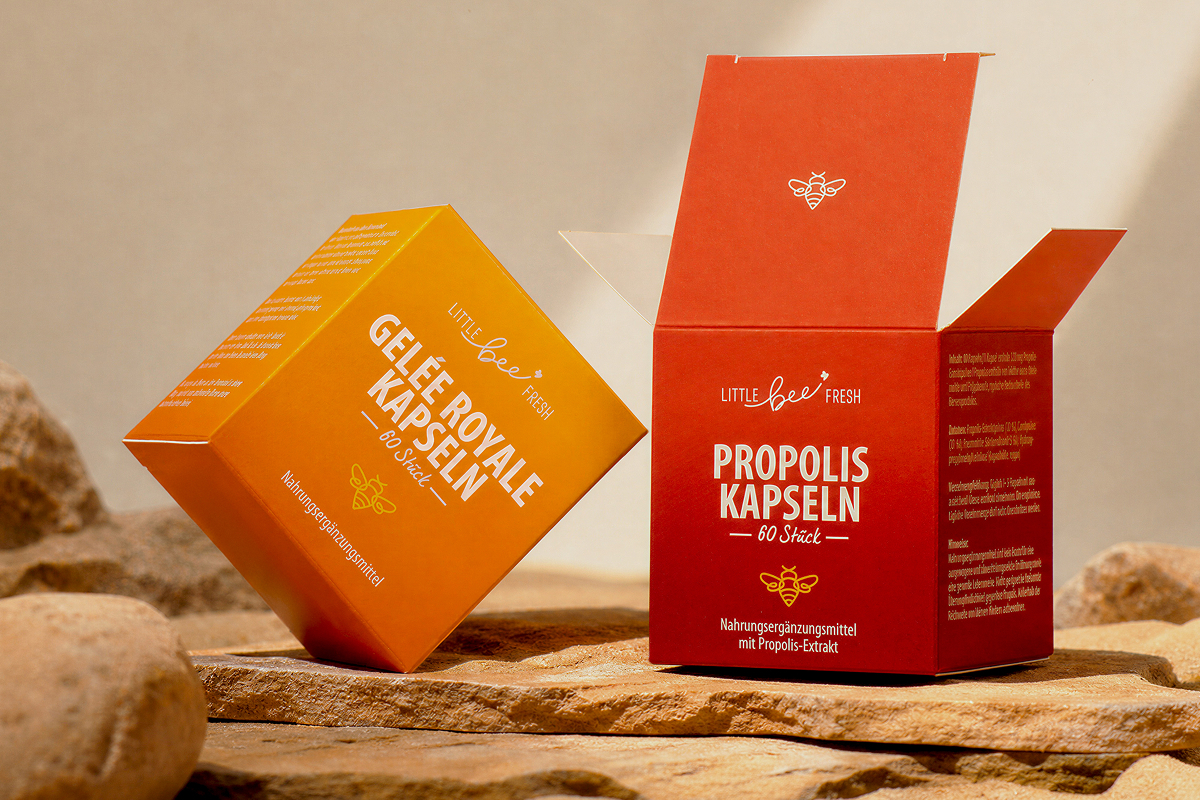
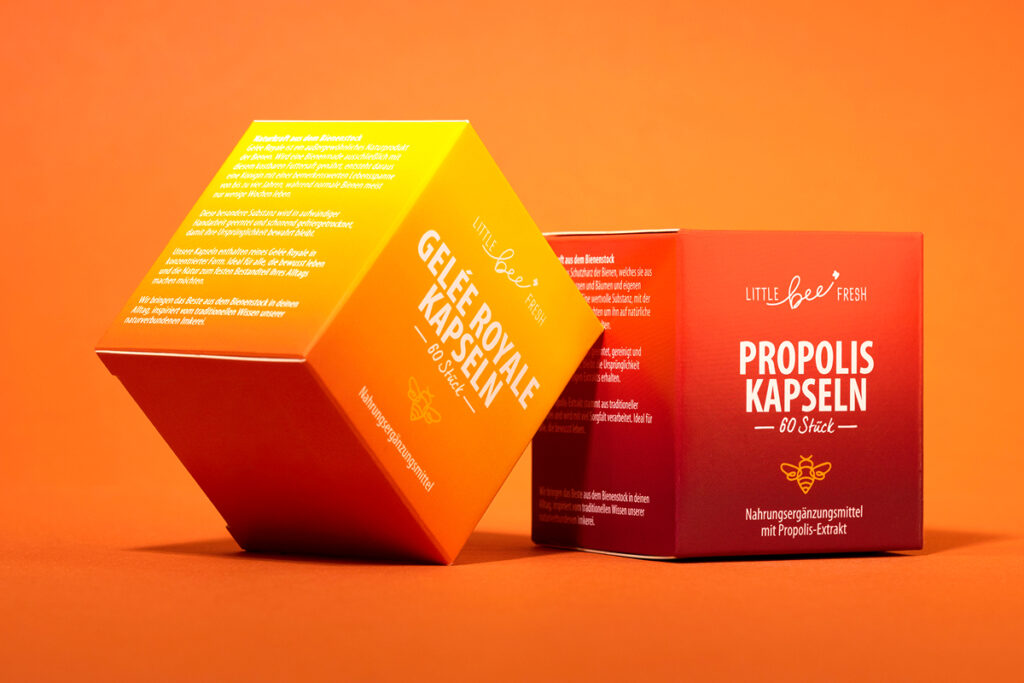
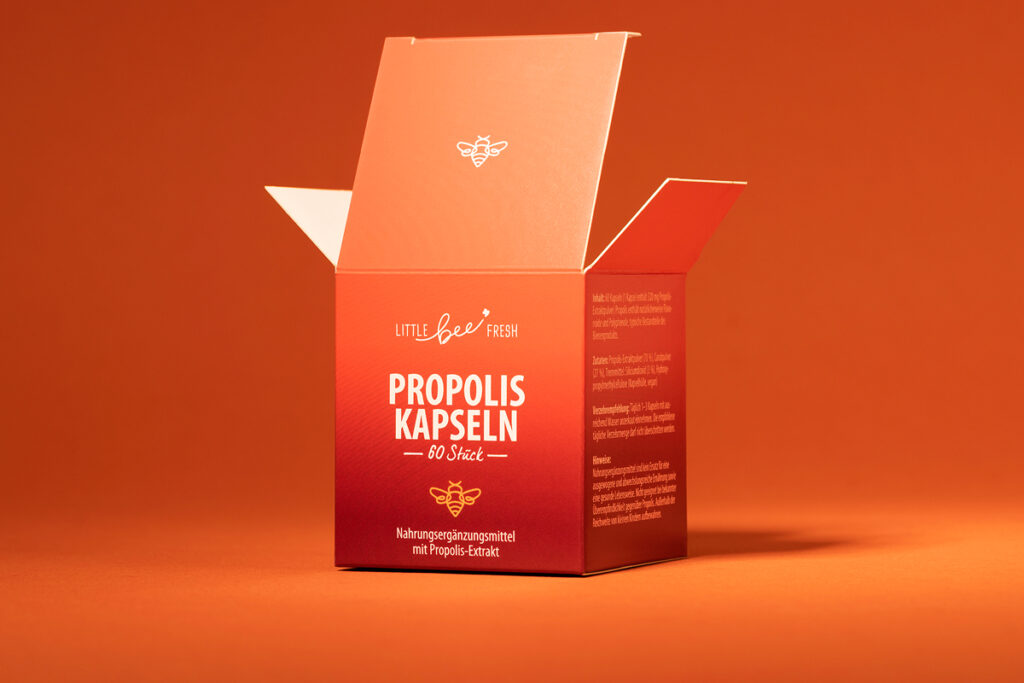
We chose Packly for our folding carton packaging because it combines an eco-conscious approach with production flexibility at competitive costs.
Packaging as an extension of your values
You already use grass paper and paper bands to package your products. How important is it to you that the packaging lives up to what’s inside, not only in terms of sustainability but also in the end-customer experience?
For us, packaging is an important part of the product experience. It is often the very first thing customers hold in their hands.
That is why it should not only be sustainable, but also convey the value and natural quality of our products. Materials like grass paper feel different, smell different, and immediately tell a story. That is exactly what we love about them.
Precisely because our products are very artisanal and nature-oriented, a generic plastic wrapper would never have been a good fit. The packaging should reflect what our brand stands for: naturalness, quality, and a mindful use of resources. We chose Packly for our cardboard packaging precisely because it combines an eco-sustainable approach with production flexibility at competitive costs.
The collaboration with Packly
How did the decision to work with Packly for your packaging come about? What were you looking for in a partner, and which aspects of the platform made the difference for your production needs?
For our new bee-derived products, we were looking for a flexible and fast partner who could handle smaller quantities without complications. When you are developing new products, you do not want to face high additional costs or lengthy coordination processes every single time.
What particularly impressed us about Packly was the flexibility in customizing packaging dimensions, with no extra costs or additional expenses for custom dies. That makes new product development considerably easier and faster.
There is also a wide selection of box types that can be tailored precisely to each product. For us, as a brand with a strong focus on design and product experience, the ability to preview your own design directly in a 3D visualization was a huge advantage.
The entire ordering process is also very intuitive and saves an incredible amount of time compared to traditional printers. Many rounds of back-and-forth are eliminated, and production turnaround is much faster. In the daily life of a small business, that makes a real difference.
Design and visual identity
Your designs, from “Orchard Meadow” to “Bee Dream” to your artist collaborations, are a very strong, distinctive element. How did you approach translating this visual identity onto the packaging created with Packly?
Our designs always emerge very close to our own world. Many are inspired by the natural surroundings around Lake Constance, our apiary, or by the simple wish to make everyday products more beautiful.
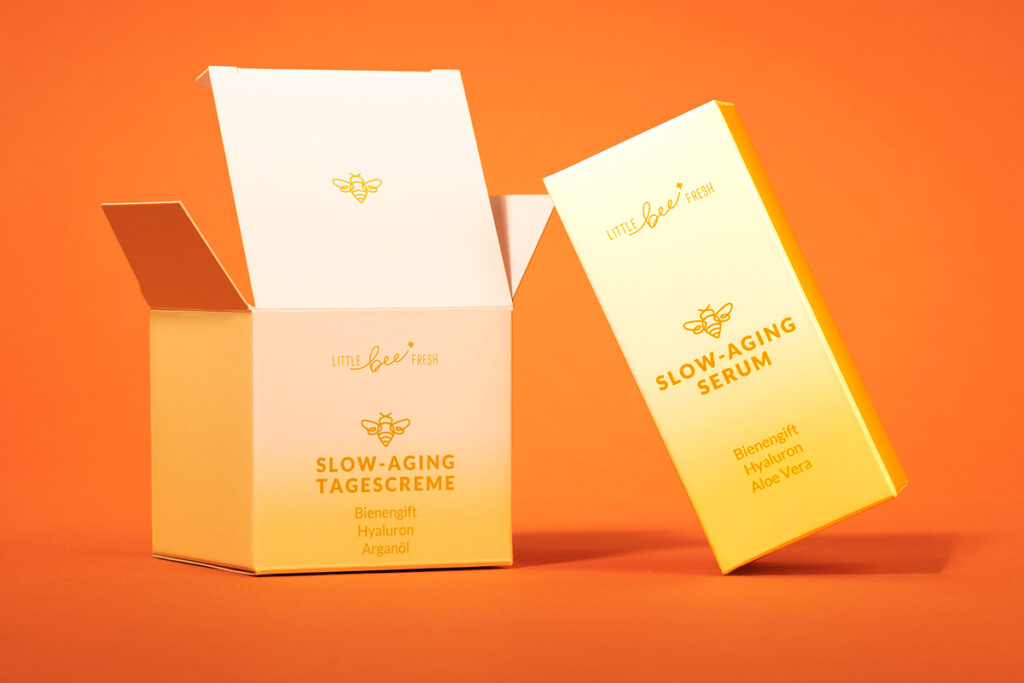
For the packaging, it was therefore essential that it felt just as natural and high-quality as the products themselves. Colors, materials, and visual design had to be consistent and immediately say “Little Bee Fresh.”
Especially with artist collaborations or special collections, we wanted the designs to be visible on the packaging as well, so that the unboxing experience itself brings joy and tells the story behind the product.
Sustainable packaging in the food-adjacent sector
Your beeswax wraps come into direct contact with food, so the packaging must meet specific requirements. What sustainability and food-safety criteria did you apply when choosing materials for your product packaging?
Since our products come into direct contact with food, we pay very close attention to the materials we use. It was important to us to choose packaging that is both safe and as resource-efficient as possible.
At the same time, the materials need to be sturdy enough to protect the products and keep them looking their best over time. It was also particularly important for us to avoid unnecessary plastic components and to favor paper-based solutions wherever possible.
We always try to combine sustainability, product protection, and a premium look in a way that makes sense.
Future and vision
You have stated that you want to keep doing “pioneering work.” Looking at the next few years, how do you envision the evolution of your approach to packaging, and what role will it play in a growth strategy that stays true to the values you started with?
We believe that packaging will need to become even more sustainable and resource-efficient while achieving even higher quality. Today, customers pay far more attention to how products are packaged, and we think that is absolutely right.
For us, growth does not mean giving up our values; it means bringing sustainable solutions further into the mainstream. That is why we want to keep experimenting with new materials, packaging ideas, and production methods that are better for the environment and resource use.
Our goal remains the same as it was at the very beginning: to develop products that are beautiful, meaningful, and long-lasting, and that bring people a little closer to nature.
Little Bee Fresh is proof that sustainability and artisan quality can coexist in every aspect of a product, packaging included. For Packly, supporting brands like this in choosing and producing their packaging means making a tangible contribution to a more responsible supply chain, one project at a time.